

News Details
19
Nov
Why Professional Car Wash Shops Are Ditching Cheap Lighting (And Losing Thousands Because of It)
You've invested heavily in your car wash operation. Quality foam cannons, premium brushes, top-tier cleaning chemicals. Your team knows how to detail cars properly. But when customers drive away and see their vehicles in natural sunlight, they spot water marks, swirl patterns, and uneven wax application that were completely invisible under your shop lights. Sound familiar? This isn't a competency problem. It's a visibility problem—and it's costing you far more money than you realize.
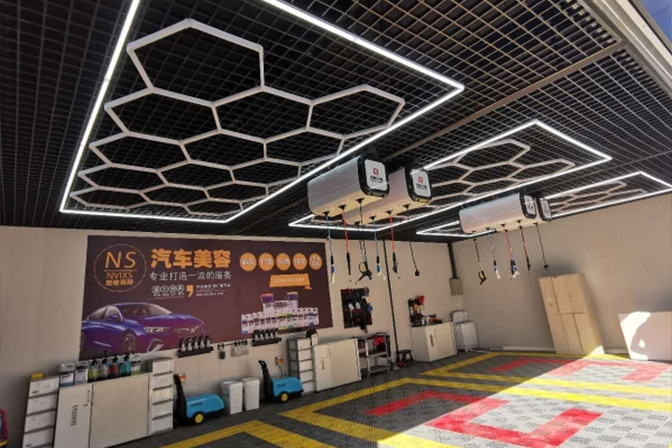
The Hidden Cost Most Shop Owners Never Calculate According to recent industry analysis, North American car wash operations using standard lighting report losing approximately 3-4 premium customers monthly due to perceived quality issues. For a typical operation running five detail bays at $800-$1,200 per customer per service, that translates to roughly $28,800 to $57,600 in annual revenue loss. The irony? Your team believes they're delivering excellent work. Customers see flaws in daylight that didn't exist in your shop. Nobody understands why. The real culprit sits above their heads: inadequate, inconsistent workshop lighting. Why Standard Workshop Lights Fail Detail Shops Most car wash facilities operate with whatever lighting seemed convenient during setup. Generic LED panels. Converted warehouse fixtures. Budget fluorescent strips. The result is always the same: uneven illumination, dark zones where defects hide, and imperceptible flickering that accumulates eye strain across shifts. Here's why this matters specifically for detail work. When applying ceramic coatings, you need to see microscopic surface imperfections. When buffing swirls, you require consistent light across the entire panel. When hand-waxing trim work, shadows create blind spots you'll inevitably miss. When inspecting final results before delivery, poor lighting masks defects that become glaringly obvious in daylight. A Toronto-based detailing operation documented this problem over eight weeks. Under their existing setup of fluorescent and budget LED lighting, they were performing touch-up work on 15-18% of detail jobs—work that should have required zero rework. The labor waste alone cost approximately $12,000 annually. After upgrading to professional-grade shadowless panel lighting designed specifically for detailing bays, their rework rate dropped to 3-4%. But the bigger win wasn't the reduced waste. It was customer retention. Clients receiving flawless results on their first visit rebooked at nearly double the rate of those requiring touch-ups. What Actually Separates Professional Lighting From Budget Alternatives Most shop owners assume all LED lighting is essentially identical. That assumption costs them money. Professional detail bay lighting incorporates three critical technologies that budget alternatives completely lack. First is true color temperature consistency. Budget LED panels typically emit yellow-tinted light around 3000K. Your team sees a perfect finish under these lights, then the customer views the car in daylight (5500K-6500K) and immediately spots swirl marks and water spots. Professional lighting operates at true 6500K daylight-equivalent color temperature. What your technicians see under your lights matches virtually exactly what customers will see in sunlight. No surprises. No angry callbacks about quality they couldn't have detected under your lighting. Second is shadowless illumination design. Standard LED panels cast shadows. Professional shadowless systems use strategic diffusion technology and precise panel placement to eliminate dead zones where imperfections hide. A European detailing facility tested this directly. They marked known paint defects, then had technicians attempt identification under budget versus professional lighting. Under budget lighting, technicians missed 23% of marked defects. Under professional lighting, they caught 96%. Third is flicker-free performance. Most budget LED panels operate at 50Hz or 60Hz frequency, causing imperceptible flickering that accumulates into significant eye strain over 6-8 hour shifts. Your best technicians make their most critical mistakes late in their shift—precisely when fatigue peaks. Professional flicker-free systems eliminate this hidden fatigue factor, allowing technicians to maintain precision throughout their entire workday. The Financial Reality Let's examine actual numbers for a typical North American detail shop with four active bays handling 3-4 detail jobs daily. Under budget lighting: You experience 15-18% rework rates. At $150-$200 per rework session in labor costs, that's $12,000-$18,000 in annual wasted labor from a four-bay operation alone. More critically: customers receiving touch-up work are 60% less likely to rebook and refer other clients. The lifetime value loss from a single dissatisfied customer typically reaches $8,000-$15,000. Under professional lighting: You achieve 3-4% rework rates. Annual rework costs drop to $2,500-$3,500. Customer satisfaction improves dramatically, directly boosting repeat business and client referrals. Professional lighting pays for itself through reduced rework within 6-12 months, then continues generating value through improved customer retention and your newfound ability to command premium pricing for years afterward. What Winning Shops Are Actually Doing The operations thriving in this market aren't winning on price. They're winning on consistency. Shops investing in proper lighting infrastructure capture high-value customers, maintain higher margins through reduced rework, and build customer loyalty through consistently flawless results. They price premium services at premium rates because they reliably deliver premium quality. Your workspace is your competitive advantage. Operating with inadequate lighting means competing at a disadvantage even when your technical skills are superior. Making Your Decision When evaluating lighting upgrades, focus your conversation on three critical elements: System design customized to your specific bay dimensions and ceiling configuration—never generic packages that ignore your facility's unique geometry. Component specifications including color temperature rating, flicker-free certification, heat dissipation capability, and estimated service life. Installation support and warranty including detailed guidance, comprehensive technical documentation, and genuine after-sale troubleshooting assistance. The best lighting provider designs a system around your specific space and operational needs, not a one-size-fits-all package. The Bottom Line Poor lighting doesn't just make detail work harder. It makes your actual work invisible to the people evaluating it—your customers. If you're losing customers to perceived quality issues while your team confidently believes they're delivering excellent work, your lighting is likely the disconnect. Shops that invest in professional lighting systems stop losing revenue to invisible defects. They start retaining customers. They start commanding premium pricing. They start building sustainable competitive advantage through operational excellence. Your next customer will evaluate your work in natural daylight, not under your bay lighting. Make absolutely certain what they see is exactly what you delivered.
2 Comments
Kevin Martin
Sun is a company that strives for the highest standards in terms of product quality and service.
Sarah Albert
A very good supplier. We have had a pleasant cooperation and can solve all the problems I need.